







Educator-led partnerships for AI in schools

Where is your school, actually, with AI?

Most schools can't answer that. It's already happening in your classrooms, in the shadows, with no shared plan and no one owning it.

Where this work runs

AI is the gift you never wanted to receive, but have to look grateful for.

You've meant to get to it properly for ages. It keeps losing to the busy day. Meanwhile it's already in your classrooms, at each teacher's discretion, with no shared guidance and no one owning it. It's landed on one person, probably you, with nothing taken off your plate to make room.

I know, because I'm a Director of Technology at an IB World School in Thailand, carrying the same thing. So this isn't a consultant describing your job from the outside.

It was never a technology problem anyway. It's about protecting the thinking, and giving your staff the clarity to know what they can do and what they can't. You don't police it. You help them use it well. Proactive, not reactive.

And I won't hand you a framework and leave. We work alongside your own team, built for your context, until the change is theirs. Better to go together than alone.

Impact

What changes, in real schools.

Different pieces of work over several years: whole staffrooms, school leaders at conferences, a multi-part workshop series, and my own school. A few of the numbers, so you can judge the work for yourself:

2 → 7a head of department's own AI confidence, from “no idea where to start” to managing AI with her team
5.5 → 8.1teacher confidence managing student AI use, after one CPD session (Grey Coat, Westminster)
~100teachers in one whole-staff AI session (Ulladulla High School)
764staff, students and leaders surveyed in one school's AI baseline (Grey Coat, Westminster)

“I went from having no idea where to start with AI to knowing what systems there were to use, how to prompt them to do what I want, how to refine the output, and how to manage my team and students…”

RachaelHead of Science · AI confidence 2 → 7
Read the story

“The collaborative element is absolutely key and the live support, sharing, listening sessions.”

Gideon WilliamsFormer Head of Digital Learning · Vibe Coding Collective
Read the story

“I would recommend it for all settings and roles.”

Deputy PrincipalLeadership conference, New South Wales
Read the story

Every one of these has been tried in my own staffroom before it ever reaches yours.

The Littlejohns Method

The partnership: twelve months, alongside your school.

We take a small number of schools at a time, because the work is hands-on, not handed over. Three stages.

Stage 01

Listen

We start where every leader says they want to: where are we, actually? The assessment hears the voice of your whole community, teachers, students, parents and leadership, and turns it into your baseline, so you decide from what your people actually said, not guesswork.

Stage 02

Learn

The shared foundation, built with your people: a governing-body-ready AI policy, communication that reaches the whole school, and a committee of your own Champions to own it. So everyone works from one understanding of what AI is for.

Stage 03

Create

Where it becomes real, and then yours: training that builds fluency and agency, tools built alongside your staff, and the judgement of what to use and when. We measure what changed and stay until your team can run it without us.

Why someone alongside you

The resources aren't enough. Someone needs to be in it with you.

There is no shortage of AI resources. Frameworks, webinars, policy templates, tool lists. Schools have access to all of it and are still stuck, because a document doesn't change what happens in a classroom on a Tuesday.

What moves it is someone in the arena with you: making the calls in your context, sitting with the staff who are nervous, and staying long enough that the capability becomes your team's, not mine.

This isn't a model I read about. It's how I work inside my own school right now: not a visitor running a session, but the person leading the technology week in and week out, alongside the staff. Right now, that someone for your school is me.

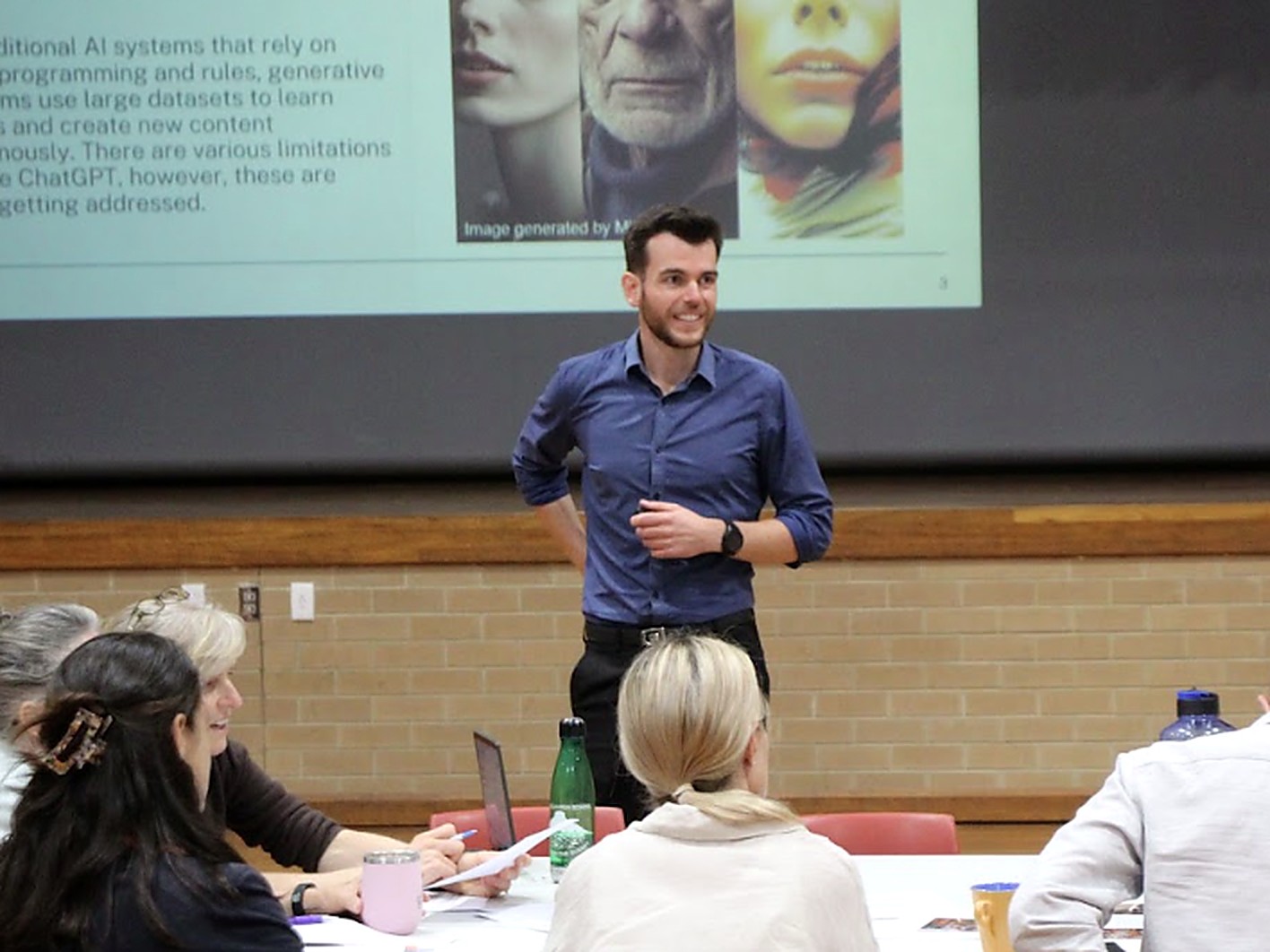
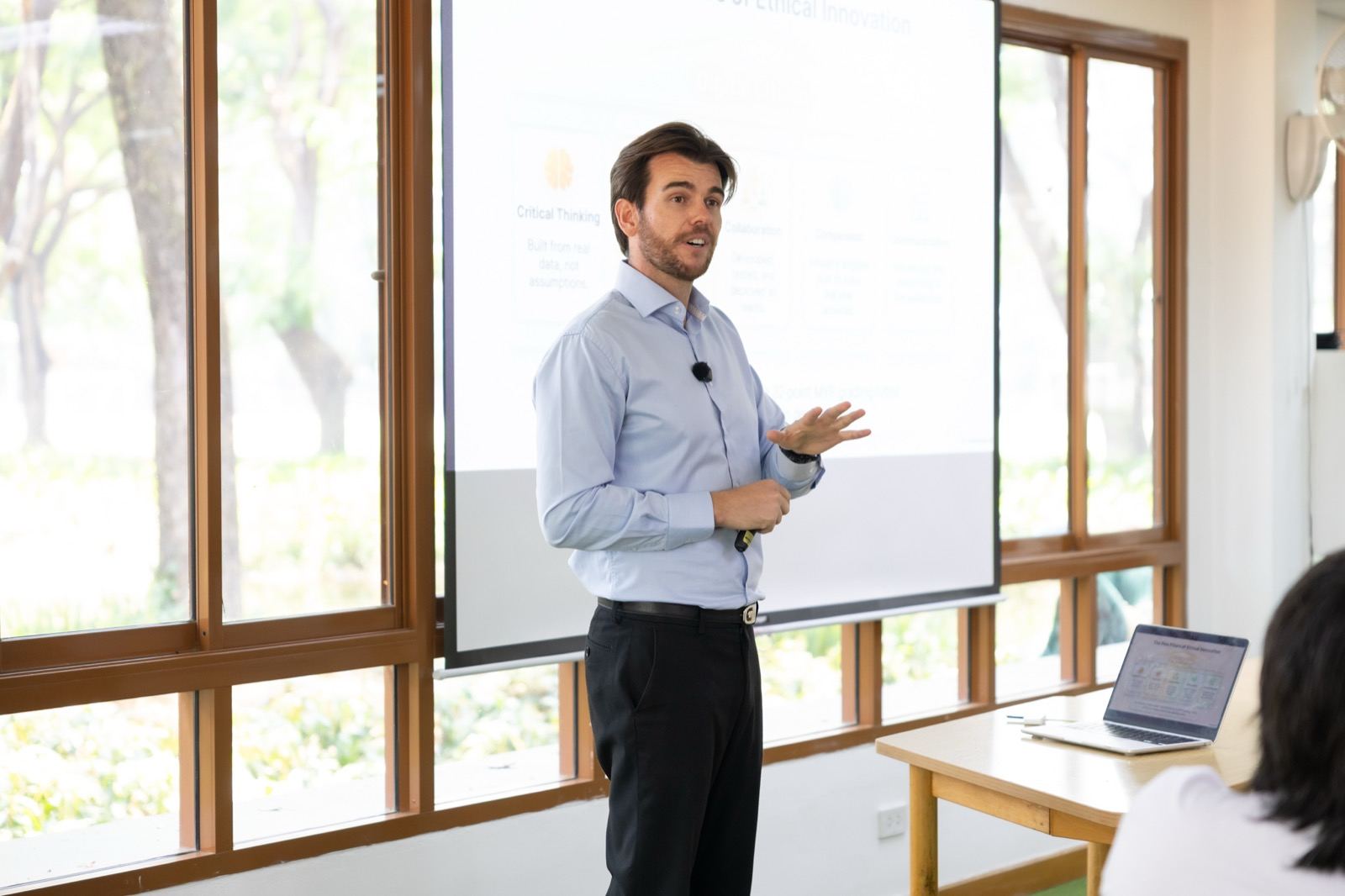
Vaughn Littlejohns leading an AI session with educators
Working with staff in the room, not handing over a report.
Vaughn Littlejohns, founder of Littlejohns

Who's behind it

I'm Vaughn. I'm not describing your job from the outside. I'm in it too.

I'm a Director of Technology and a former deputy principal, leading the AI work inside an IB World School in Thailand right now: the board that wants answers, the staff who are nervous, the parent email. The same things you're carrying. I built Littlejohns because the resources alone are never enough. Someone needs to be in it with you.

It's built to be bigger than me, too. As it grows, Littlejohns Educators (practising teachers and leaders we train) come alongside more schools, so it was never going to depend on one person.

Writing

Latest writing on AI in schools

What I'm working out, as I work it out. Short, practical pieces on putting AI to work in a school. No hype, just the real version, written from inside the job.

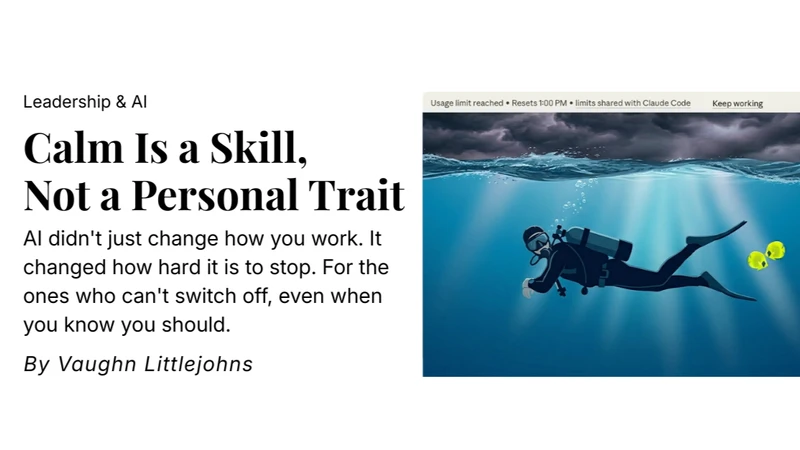
Calm Is a Skill, Not a Personal Trait: article by Vaughn Littlejohns

Latest29 March 2026

Calm Is a Skill, Not a Personal Trait

Calm under pressure isn't a personality you're born with, it's a skill you can build. Borrowing five rules from scuba diving, here's how to keep your nervous system working while the pace of AI keeps rising, and why rest is structural, not a luxury.

Read on LinkedIn
The Littlejohns Letter

My most useful tactics on AI in schools — and nothing when I've nothing worth your time.

Read or subscribe

Common questions

What working together involves

What is an educator-led partnership for AI in schools?

It means the person guiding your school's AI work is a practising educator, someone leading technology and AI inside a real school right now, rather than a consultant or a software vendor. An educator-led partnership starts from how teaching and learning really work, keeps the human thinking at the centre, and builds your own staff's capability over time instead of handing over a report. That's what Littlejohns is: AI integration led by an educator, alongside your school.

What is a Littlejohns partnership?

A twelve-month, alongside-the-school engagement to implement AI across a single school. It runs across every layer, leadership, senior school, junior school, even parents, and covers policy, staff capability, the actual tools, and your own internal experts. It's done coaching-style with your people, in the room, not handed over as a report.

How should a school start with AI?

Start by finding out where you are now, before buying tools or writing rules. In my experience the sequence that works is: listen first (a baseline of staff, students and leadership), then build the shared foundation (a policy, clear communication, and your own internal champions), and only then scale up training and tools. Tools-first is the natural place to start, and it's where most of us started. In my experience it's also where things stall.

We're not sure we're ready, or even where to start.

That's the most common place to begin, and it's the point. You start by finding out where your school stands. An assessment of your staff, students and leadership gives you that baseline, and it's a low-cost, low-risk first step that tells you what to do next.

Who is it for?

Heads of School, Deputy Principals, and Directors of Technology who feel personally accountable for getting AI right and want a practitioner, not a slide deck.

Where are you based, and who do you work with?

Based in Chiang Mai, Thailand. I work with schools across Southeast Asia, Australia and the UK, in person or live online.

Get in touch

If AI in your school feels like a problem you are carrying alone, let's start with a conversation.

  1. 1Book the call.
  2. 2We map where your school stands and whether this fits.
  3. 3You get a written next step either way.

30 minutes. No pitch, no slides.

Or email me directly: